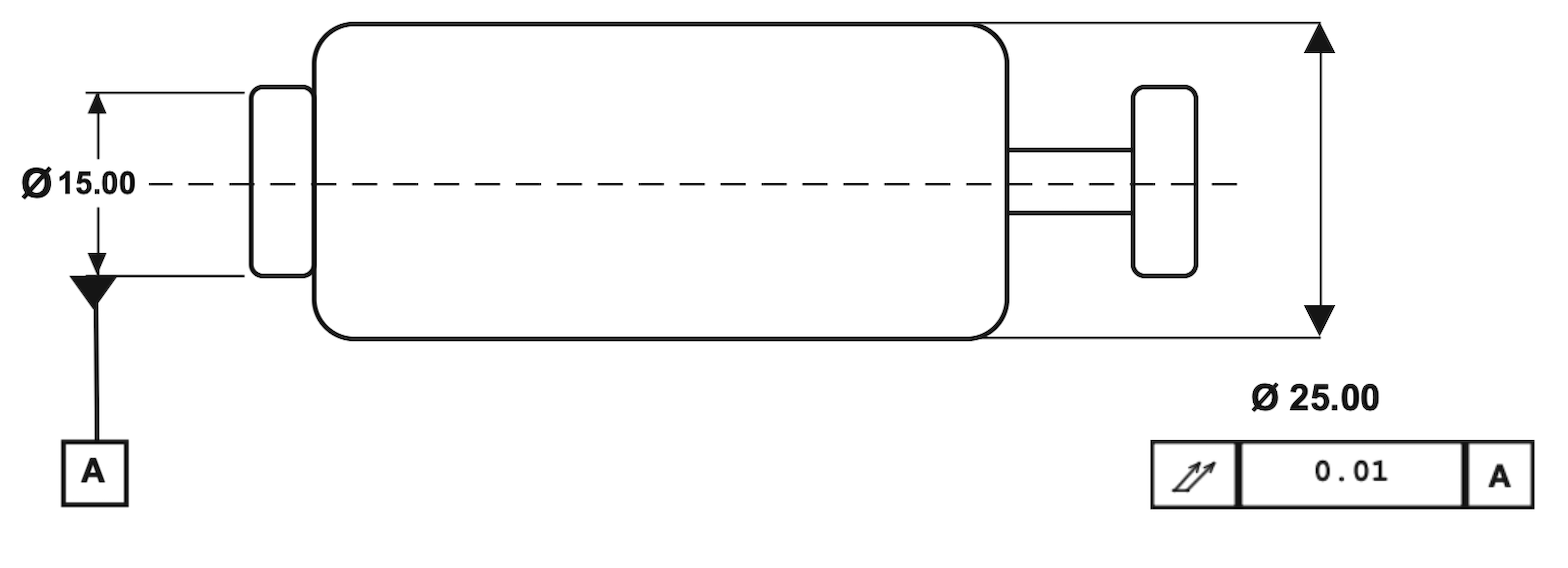
Controls how straight a line element on a surface must be. Applied to individual line elements running along the length or width of a flat or cylindrical surface. The tolerance zone is two parallel straight lines within which each surface line element must lie. No datum reference required.
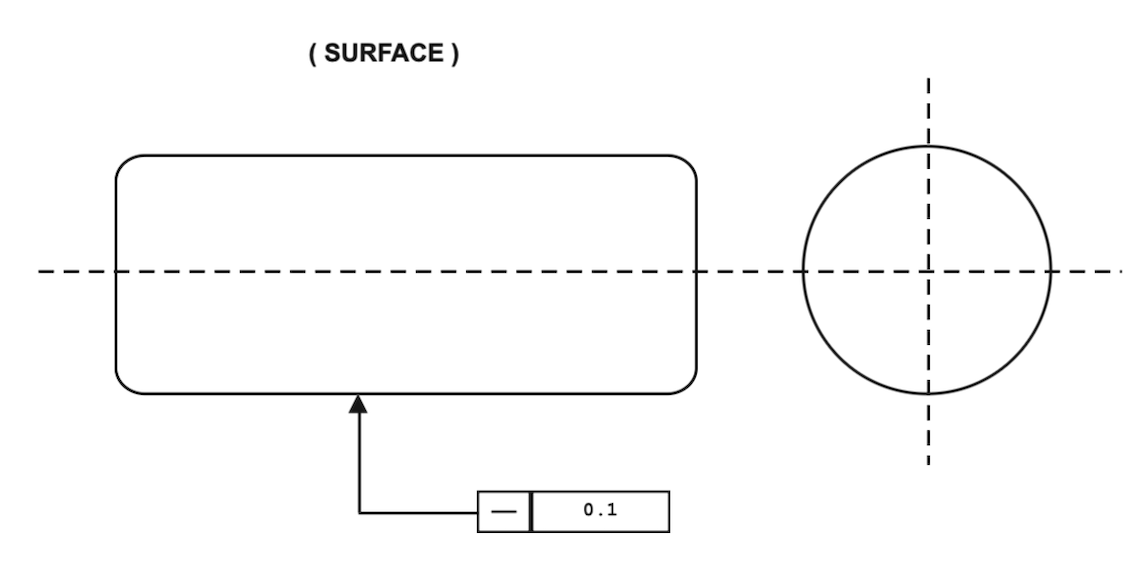
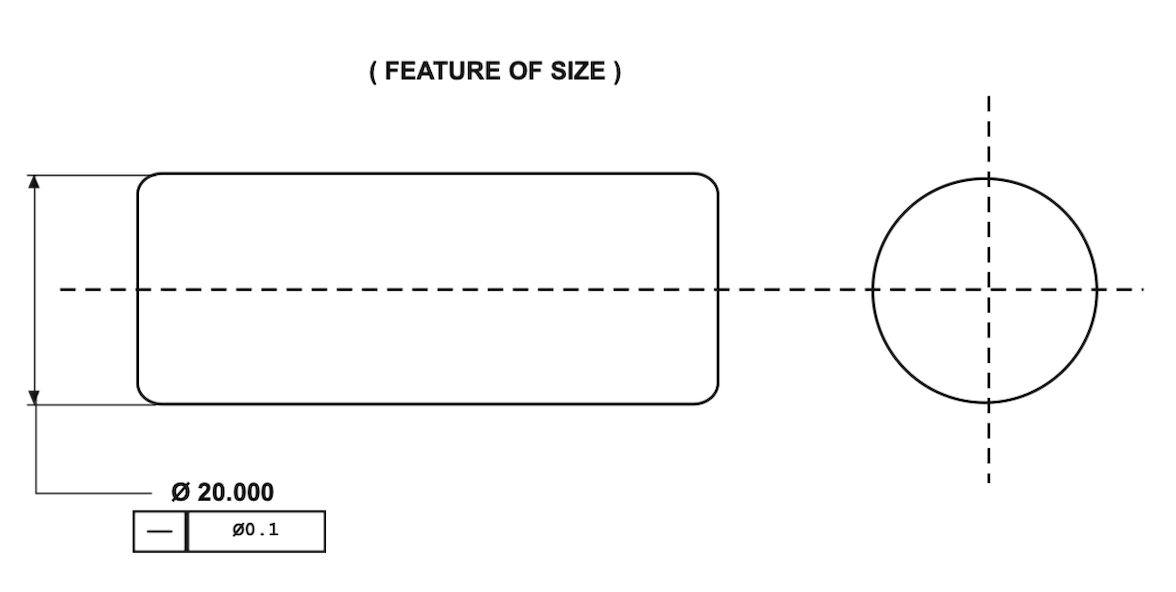
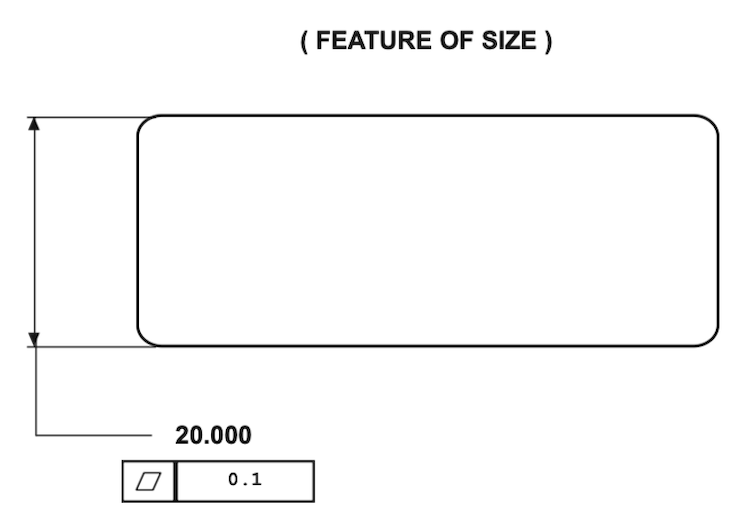
Controls how flat an entire surface must be. The tolerance zone is the space between two parallel planes within which all points on the controlled surface must lie. No datum reference is required — the surface is measured relative to itself. Commonly applied to machined mating faces, base surfaces and sealing faces.
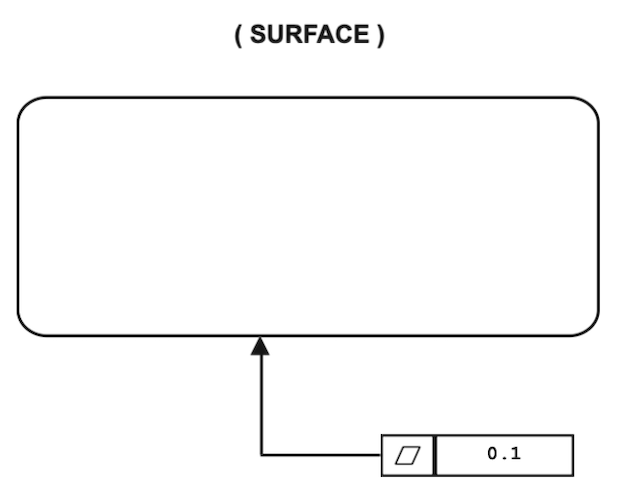
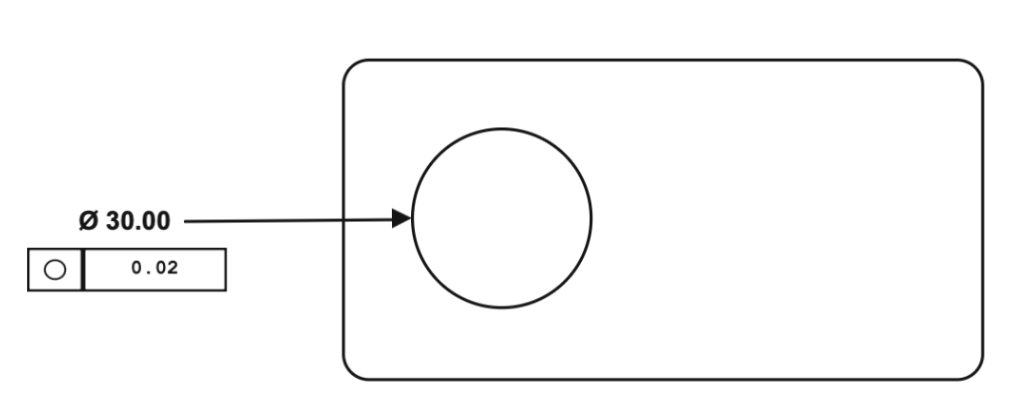
Also called roundness. Controls how circular a single cross-sectional slice of a feature must be. The tolerance zone is the annular region between two concentric circles at each individual cross-section, measured perpendicular to the axis. Applied to cylinders, cones and spheres. No datum reference required.
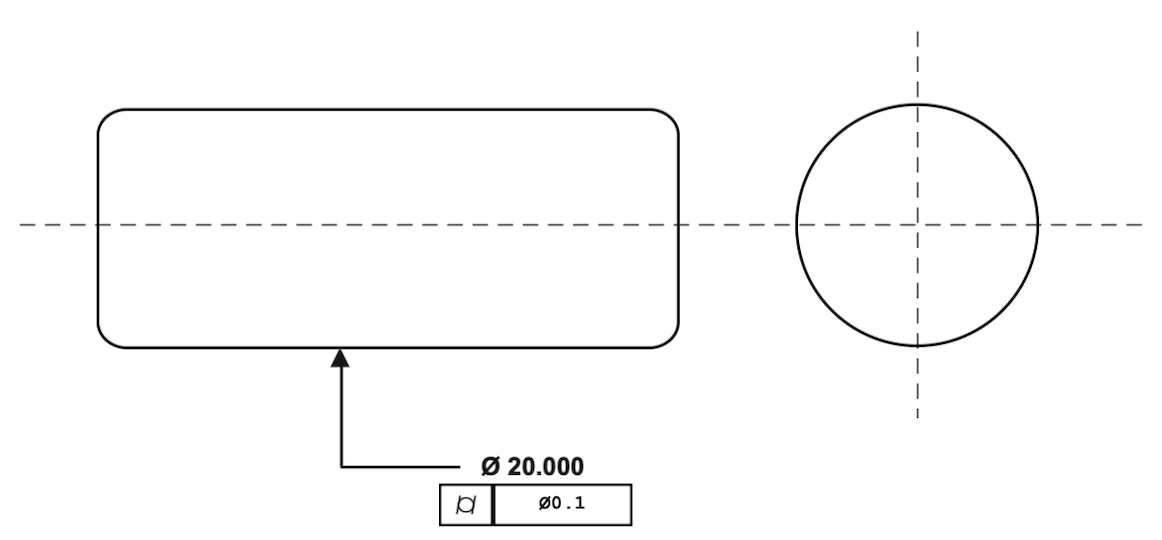
Controls the complete form of an entire cylindrical surface simultaneously — combining roundness, straightness and taper into one requirement. The tolerance zone is the annular space between two coaxial cylinders. The tightest of the form controls for shafts and bores. No datum reference required.
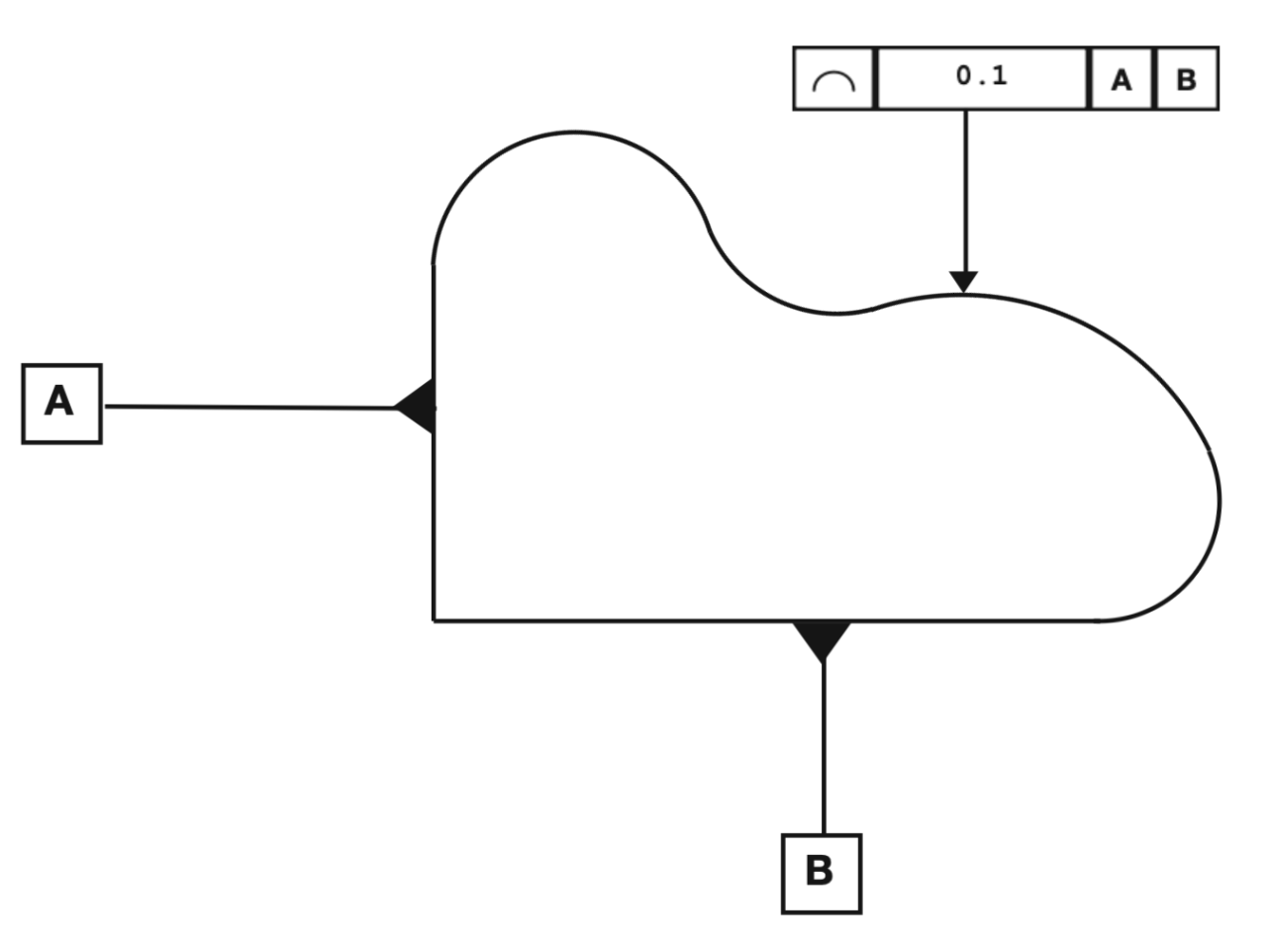
Controls the shape of a curved line at a single 2D cross-section. The tolerance zone is a uniform band of equal width on each side of the true profile at that slice. Can be applied with or without datum references. Common on aerofoils, cams and moulded profiles where only the cross-sectional shape matters.
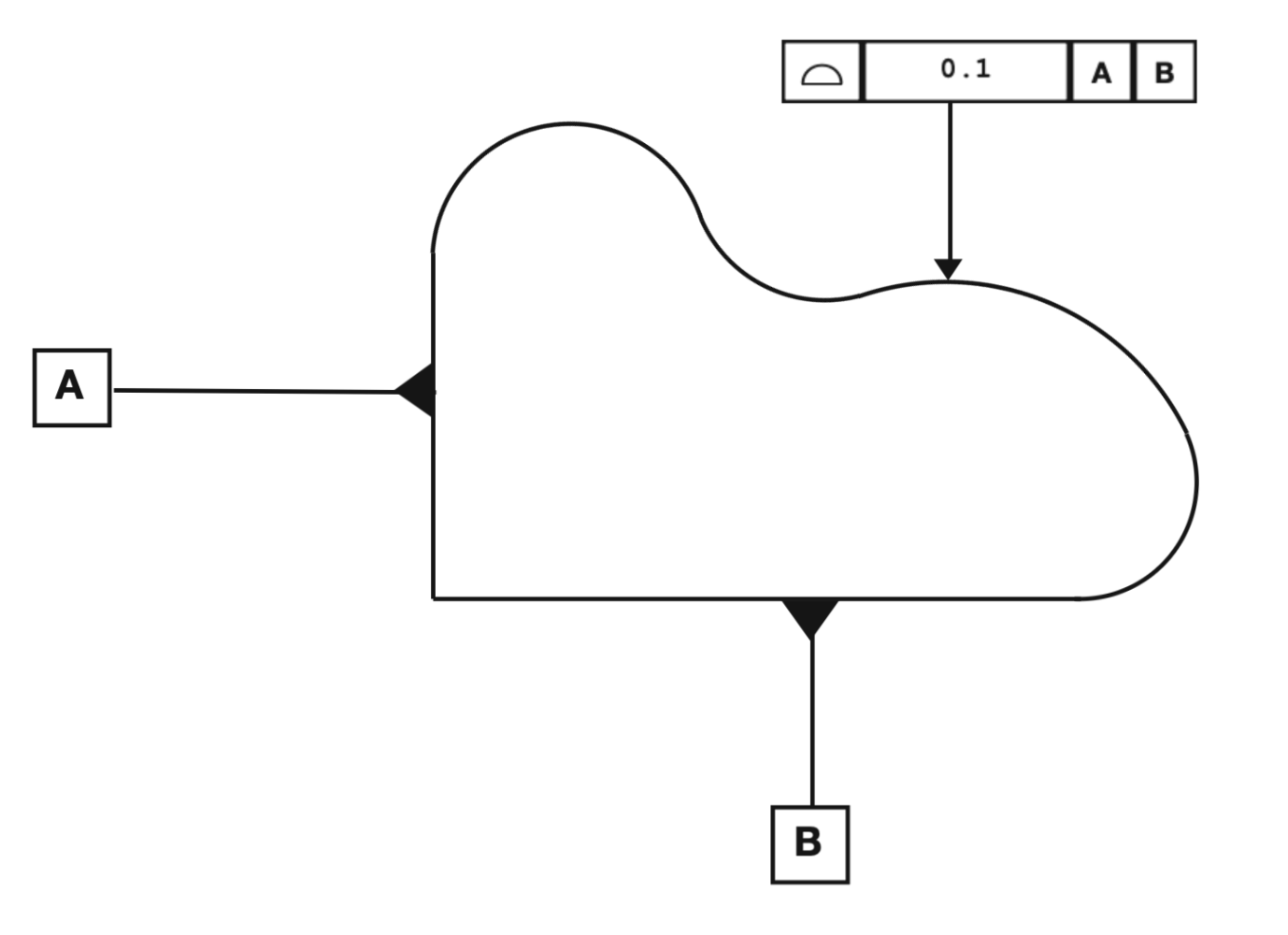
Controls the shape of an entire 3D surface at once — the most powerful of the profile controls. The tolerance zone is a uniform 3D shell on either side of the true surface. Requires datum references in most applications. Used to control complex sculpted or formed surfaces relative to nominal geometry.
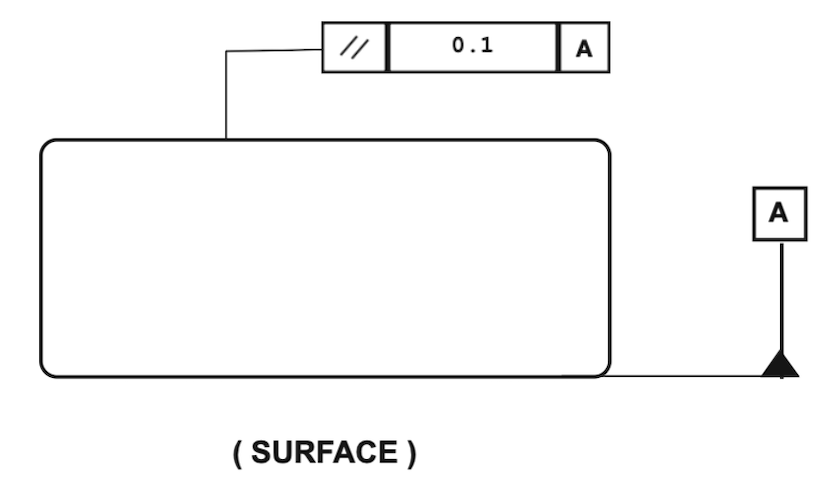
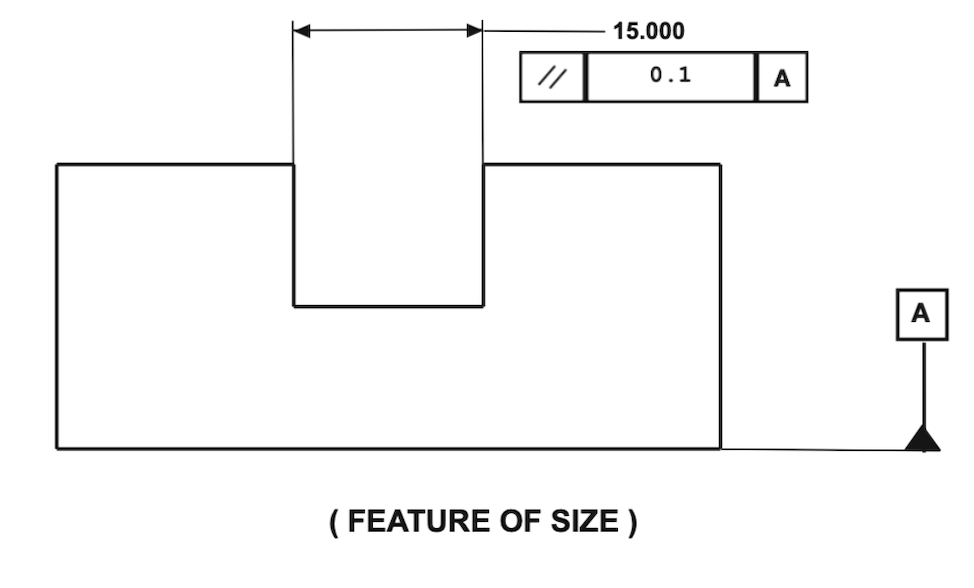
Controls how parallel a surface or axis is to a datum reference. The tolerance zone is two parallel planes at the specified distance, oriented parallel to the datum. A datum reference is always required. Used extensively on machined blocks and mating surfaces where alignment matters.
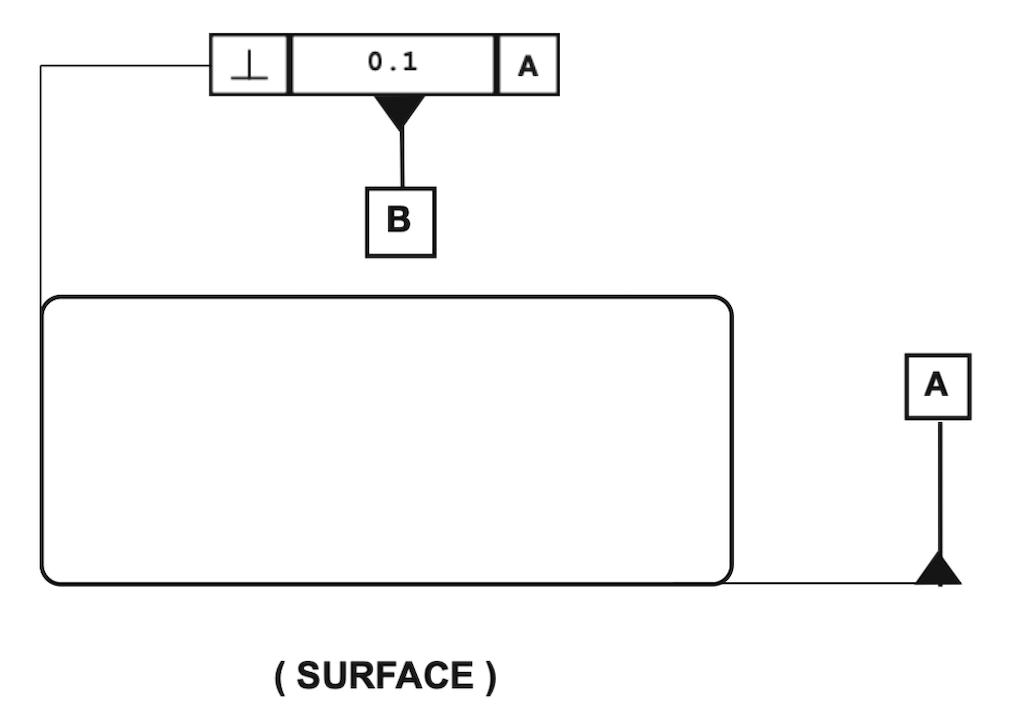
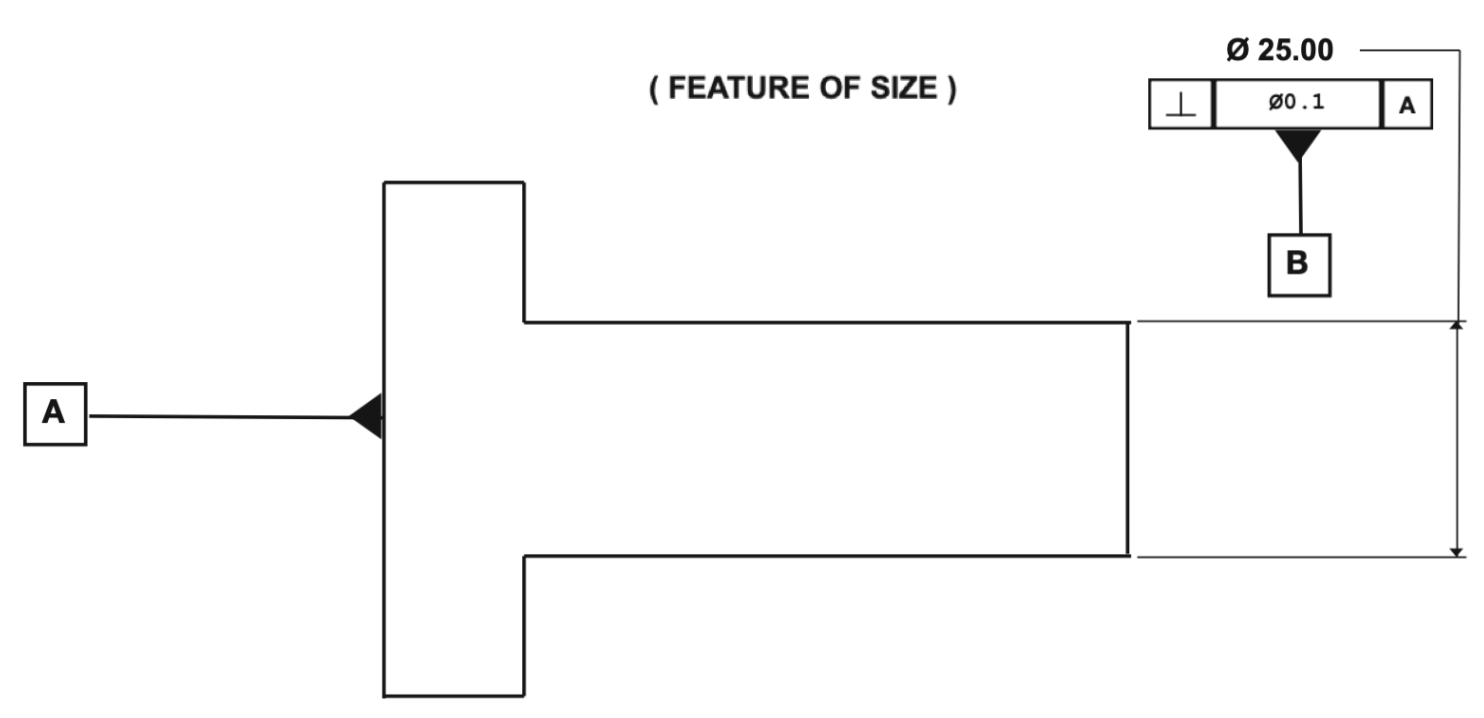
Controls how perpendicular a surface, axis or centre plane is to a datum. The tolerance zone is two parallel planes perpendicular to the datum within which the controlled feature must lie. A datum reference is always required. Applied to upright walls, bores and shafts that must stand at exactly 90° to a reference surface.
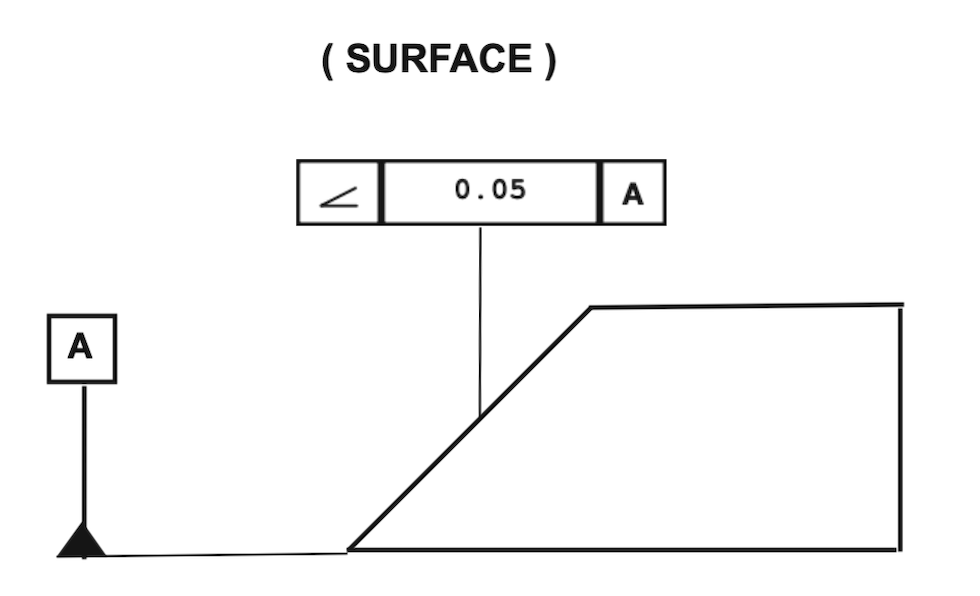
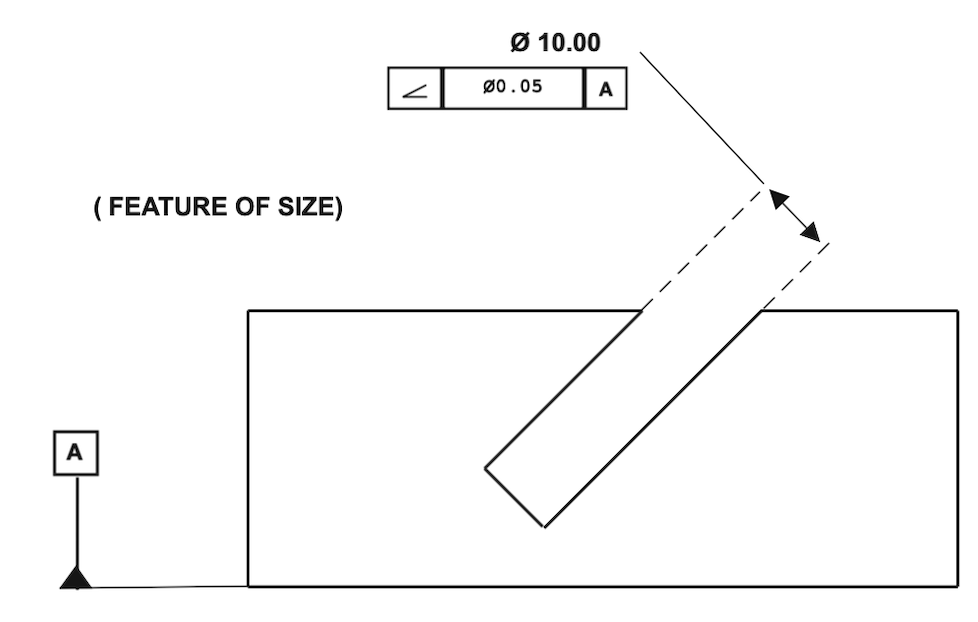
Controls how precisely a surface or axis is oriented at a specified angle to a datum. The tolerance zone is two parallel planes at the exact basic angle relative to the datum. A datum reference is always required and the nominal angle must be given as a basic dimension. Used on angled surfaces, chamfers and tapered bores.
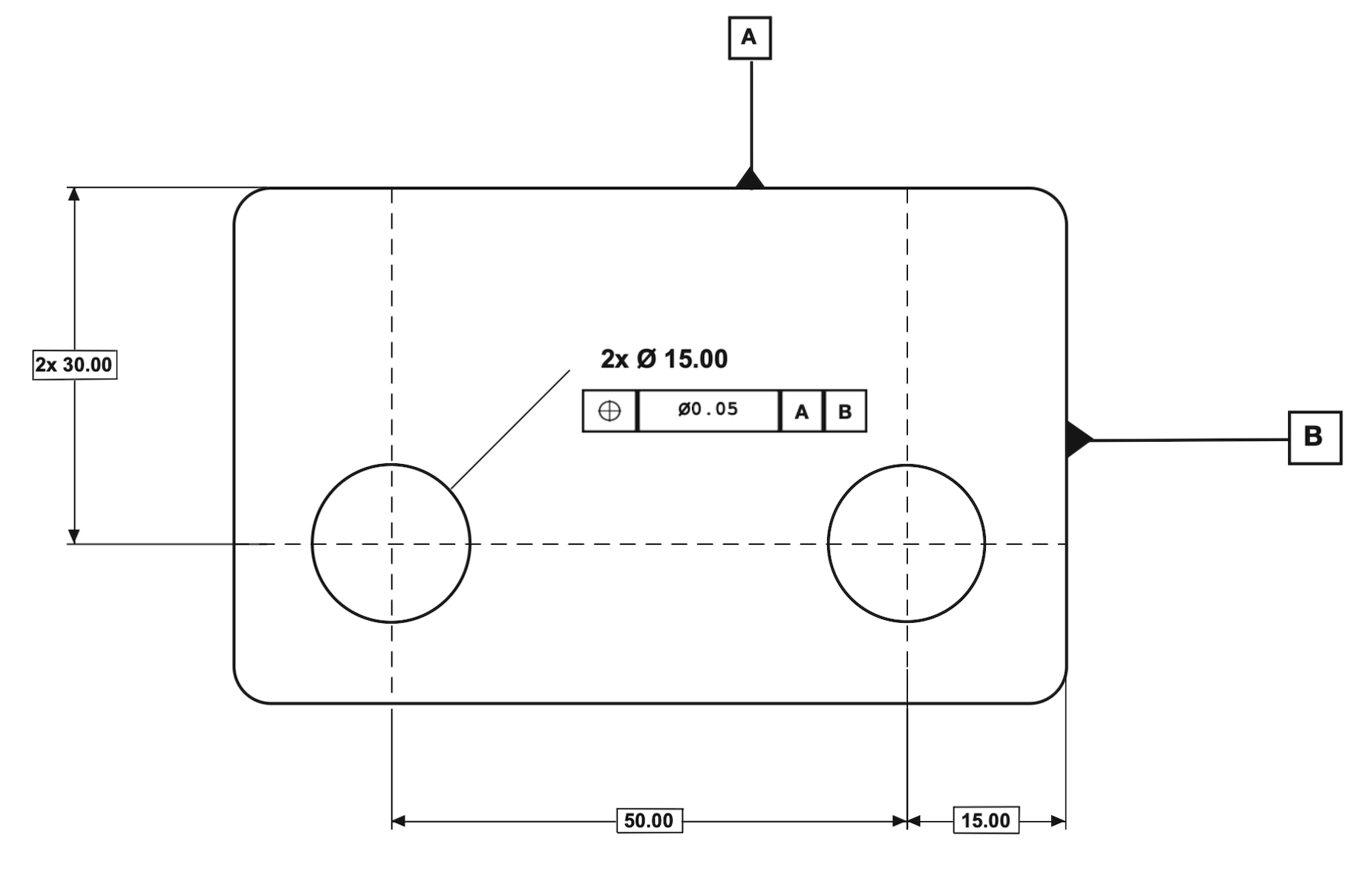
Controls the location of a feature (hole, slot or boss) relative to its theoretically exact position defined by basic dimensions from datum references. The tolerance zone is a cylinder (for a hole) or two parallel planes centred on the true position. The most widely used GD&T characteristic in manufacturing.
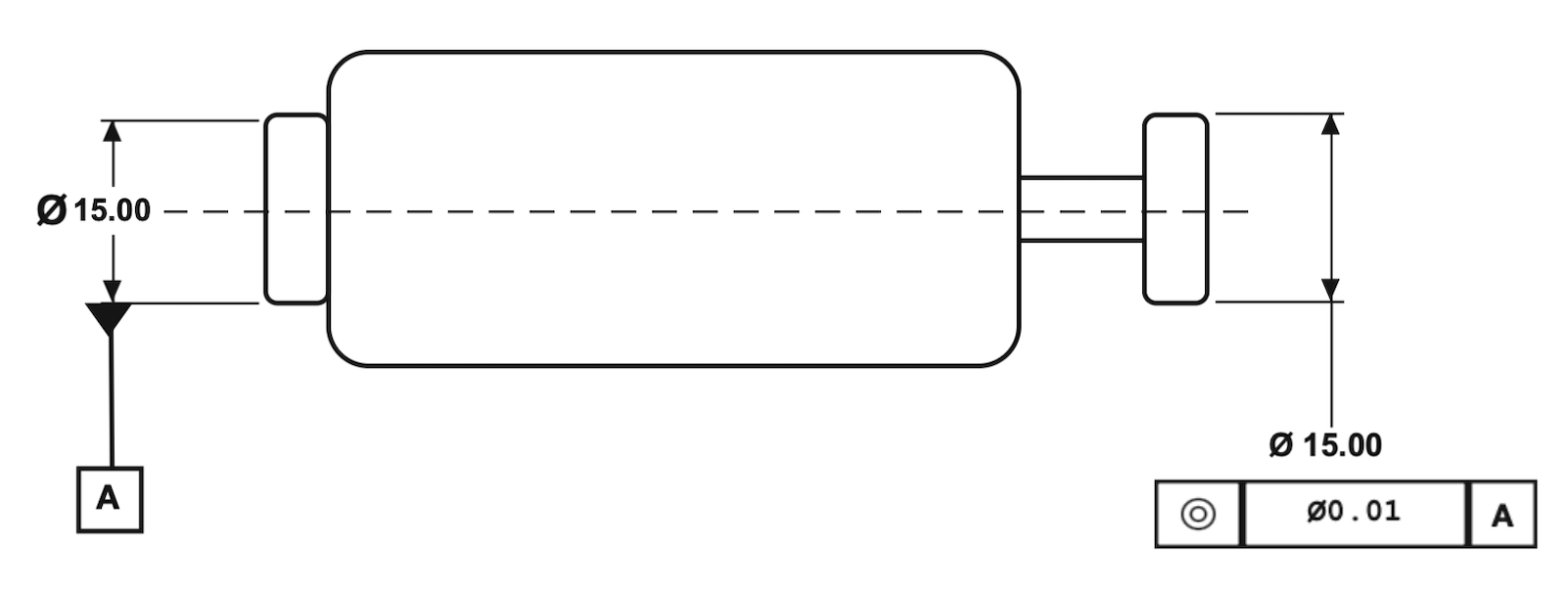
Controls whether the median points of a diametrically opposed cylindrical feature share the same axis as the datum axis. The tolerance zone is a cylinder whose axis is coincident with the datum axis. Requires a rotational datum. Often superseded by circular runout in practice as runout is easier to verify on a CMM or with a dial gauge.
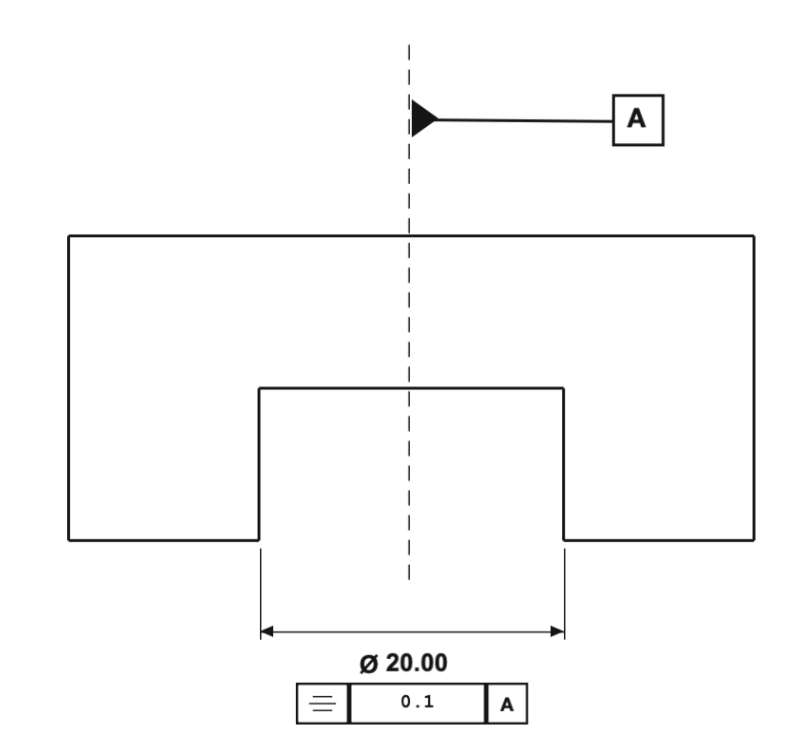
Controls whether a feature is equally disposed about the median plane of a datum. The tolerance zone is two parallel planes equally spaced about the datum centre plane. Requires a datum reference. Less commonly used than true position, as it is difficult to verify without specialist measurement and is removed from ASME Y14.5-2018.
Measures total variation in a single circular cross-section as the part is rotated 360° about the datum axis. The tolerance is the full indicator movement (FIM) — the difference between the highest and lowest reading at one slice. Simpler and more commonly used than total runout for eccentricity and wobble control. Requires a datum axis.
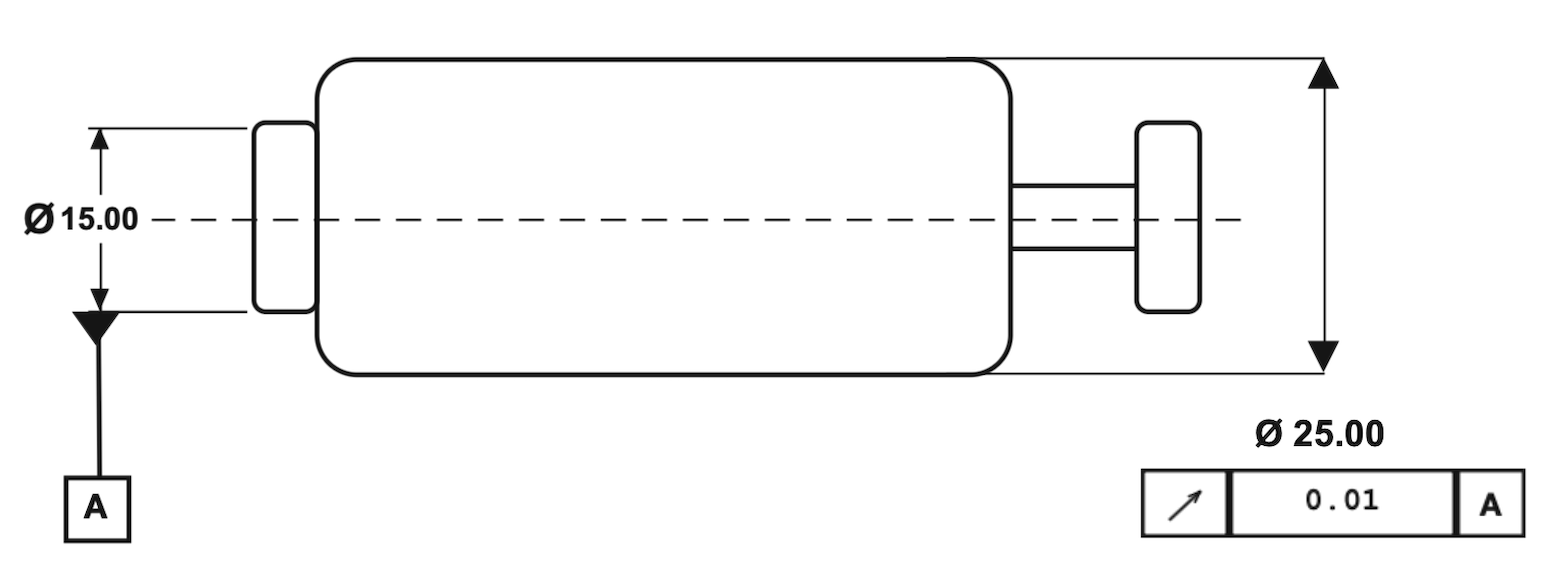
Measures variation across the entire cylindrical surface simultaneously as the part rotates about the datum axis — both radial and axial. The indicator sweeps the full length of the surface rather than a single cross-section. A stricter and more comprehensive control than circular runout. Requires a datum axis.